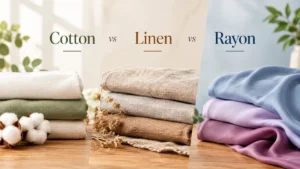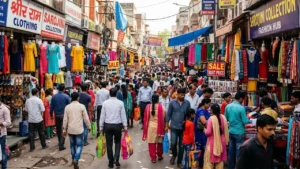
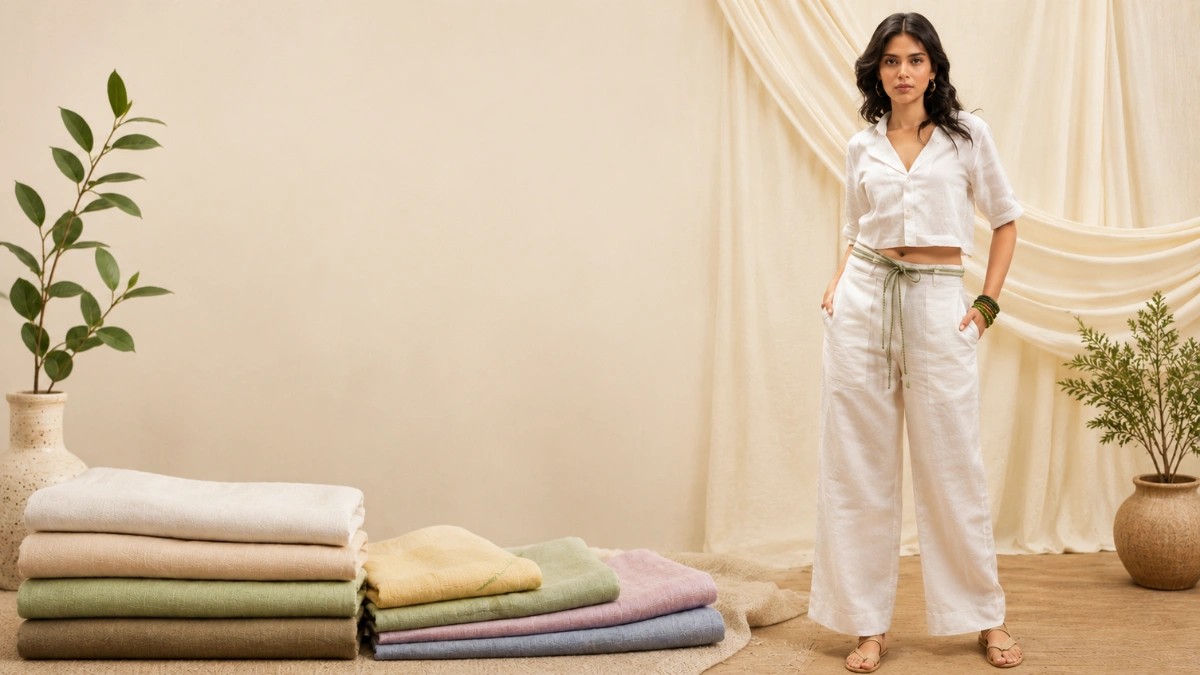
Walk into any thoughtfully curated boutique in Mumbai, Bangalore, or Delhi today, and you will notice a pattern: earthy tones, clean silhouettes, and the unmistakable texture of linen. Linen has emerged as India’s most loved fabric because it perfectly suits the country’s climate and lifestyle — light, airy, moisture-absorbent, and naturally elegant.
The timing is not coincidental. 2025 has marked a pivotal moment for sustainable fashion in India, with a growing focus on organic and locally sourced fabrics like cotton, khadi, linen, and bamboo silk. Meanwhile, linen’s market share in India’s textile sector could reach 12–15% by 2030, driven by millennials and luxury consumers.
What was once a niche fabric associated with formal summer shirts has evolved into a full lifestyle statement. According to Fibre2Fashion, linen demand in India has grown by over 15% annually due to its natural fiber appeal and breathable quality. An entire ecosystem of homegrown labels — some fresh-faced D2C startups, some quietly established artisanal studios — is now building India’s linen future.
Here are the 10 emerging brands shaping that story.
Table of Contents
Toggle1. Linen Trail — The Quiet Luxury Pioneer
If one brand has come to define India’s modern linen sensibility, it is Linen Trail. Linen Trail stands at the forefront of India’s linen revolution, focusing on 100% pure linen clothing for men and women, featuring shirts, coord sets, trousers, and elegant jackets. Its approach combines minimalistic design with sustainability, embodying the concept of quiet luxury — refined, breathable, and eco-conscious.
The brand is known for its pure European flax linen and exceptional craftsmanship, blending timeless design with ethical production. In a market flooded with linen-cotton blends masquerading as pure linen, Linen Trail’s transparency about sourcing has become a genuine differentiator. The brand has ambitiously positioned itself as the world’s largest pure linen collection — a claim that its growing catalogue of neutral-toned, precisely tailored menswear and womenswear goes a long way toward supporting.
What makes Linen Trail truly emerging is not just quality — it is the growing consumer vocabulary it has helped build around “sustainable quiet luxury,” a phrase that resonates deeply with India’s increasingly conscious urban shopper.
Best for: Men and women seeking minimalist, premium linen wardrobe essentials. Price range: Mid to premium.
2. Primal Gray — The GOTS-Certified Disruptor
Primal Gray has made a name for itself by doing something deceptively simple: making organic linen cool for the modern Indian man. Primal Gray emerges as a standout linen brand in India due to its commitment to GOTS-certified organic linen, innovative oversized designs, and sustainable manufacturing practices.
Key features the brand focuses on include long-fiber construction, sustainable certifications like GOTS, and high stitch density for durability. The brand’s signature Oversize Panel Shirt combines contemporary design with traditional linen craftsmanship, offering the perfect solution for men seeking premium quality without compromising on style or environmental values.
GOTS — the Global Organic Textile Standard — is one of the most rigorous organic certifications in the textile world. The fact that Primal Gray has secured this certification places it in a genuinely elite tier of sustainable fashion in India, where greenwashing is rampant and verified certifications remain rare. The brand’s oversized silhouettes, which are designed to work with linen’s natural drape rather than against it, have resonated strongly with India’s younger, style-conscious consumers.
Best for: Men who want organic linen with a modern, relaxed streetwear edge. Price range: Mid-premium.
3. KAVERI — The All-Linen Artisan Label
KAVERI is one of the most singular stories in Indian fashion. Kaveri is India’s finest all-linen designer brand, inspired by the natural beauty, texture, drape, and sustainability of the fabric — providing inclusive and honest clothing that exudes confidence and versatility, with free-flowing comfort that is easy to wear everyday from day to night.
KAVERI claims to be the only all-linen brand in India, using only the purest of linen fabrics. The brand draws on linen’s rich and long history — earthy yet luxurious, casual as well as formal — with styles inspired by the natural beauty, texture, drape, and fall of the fabric.
Founded by Kaveri Lalchand and based in Chennai, the brand has taken a different approach from most, paying close attention to what women actually need and want. This perspective has carved a unique niche for the label, with linen as a central element in all collections. By emphasising comfort and the lived-in charm of the fabric over time, KAVERI emphasises that quality fabric can make all the difference.
KAVERI specialises in hand-embroidered, painted, and appliqué linen wear. It uses sustainable and natural dyeing processes, promotes slow fashion and conscious consumerism, and is known for fluid silhouettes that flatter every body type.
In a country where size inclusivity in fashion remains a painful gap, KAVERI’s body-inclusive design philosophy has earned it an unusually devoted following — and international recognition.
Best for: Women seeking artisan-crafted, body-inclusive linen fashion. Price range: Premium.
4. Zebein India — The D2C Linen Powerhouse
Zebein India is the kind of brand that did not exist five years ago but feels indispensable today. Operating as a direct-to-consumer label, it has positioned itself squarely in the premium linen segment with a clean, editorial identity and an exceptionally broad range. Zebein’s collection showcases the inherent beauty and comfort of linen, offering timeless pieces designed for effortless style — spanning linen shirts, pants, dresses, kurtas, tops, shorts, vests, stoles, blazers, and co-ord sets.
Zebein India has positioned itself as a modern name in India’s premium linen segment, built around thoughtful design and functionality. The brand regularly drops themed collections — from the earthy “Eat Pray Love” range to the bold “Black Linen Luxe” edit — that demonstrate a sophisticated understanding of how Indian women want to dress: with intention, with variety, and with fabric that actually performs in the heat.
Its D2C model, pan-India free delivery, and accessible price points have made premium linen available to consumers far beyond the metro cities.
Best for: Women wanting versatile, contemporary linen for every occasion. Price range: Mid to premium.
5. The Summer House — The Slow Fashion Standard-Bearer
The Summer House is Bangalore’s most beloved quiet fashion brand, and linen is at the core of its identity. The brand works with organic linen and celebrates handmade clothing, with a philosophy rooted in slowness and the refusal to follow fast-fashion cycles.
The Summer House creates handmade clothing using organic cotton and sustainable practices, and has been consistently recognised among India’s top sustainable fashion labels. The brand’s linen collection spans maxi dresses, co-ord sets, relaxed-fit trousers, and artisanal tops, all cut to flatter a wide range of body types. It is particularly celebrated for its resort-wear aesthetic — the kind of wardrobe you build for a slow life, not a performative one.
What separates The Summer House from its peers is the quality of its narrative. Every drop feels considered and unhurried, with production runs that honour the artisans behind each stitch. Its ability to make linen feel romantic and poetic, not just practical, has built it a fiercely loyal community.
Best for: Women seeking sustainable, artistic linen with a resort-and-everyday crossover aesthetic. Price range: Mid to premium.
6. Nicobar — The Lifestyle Brand That Wears Linen Well
Nicobar is not a linen-only brand, but within India’s premium lifestyle fashion space, it may be the most consistently impressive executor of linen dressing. Nicobar is a contemporary Indian lifestyle brand celebrated for its minimal, clean design language and globally inspired aesthetic. Its linen collection reflects a modern approach to everyday dressing, combining breathable fabrics with relaxed silhouettes and versatile, earthy color palettes. Nicobar’s linen pieces are thoughtfully designed to transition seamlessly from work to travel to leisure, with a focus not just on style but on comfort and longevity.
Nicobar is described as a minimalistic and modern lifestyle brand with a wide linen range, from shirts to dresses. Its consistent use of soft neutral and coastal-inspired tones has made it one of the go-to brands for urban Indians who want clothing that works as well in a Goa café as in a Delhi boardroom. Stocked both online and across its physical stores, Nicobar brings accessibility without compromising on its carefully maintained visual identity.
Best for: Men and women seeking versatile, globally inspired linen that travels well. Price range: Mid-premium.
7. Doodlage — The Upcycled Linen Pioneer
Doodlage occupies a unique space in India’s linen conversation because its starting point is not pristine European flax — it is waste. Doodlage has carved a niche in India’s sustainable fashion scene with thoughtfully designed collections that blend contemporary aesthetics with environmental responsibility. The brand creates standout pieces using upcycled factory waste, recycled textiles, and naturally dyed organic fabrics. Its linen dresses are celebrated for breathable comfort, clean cuts, and eco-conscious materials.
Doodlage offers stylish, relaxed-fit linen clothing with bold prints and a sustainable ethos. The brand’s willingness to work with recovered and recycled materials — and make them fashionable rather than merely functional — has made it something of an icon for India’s younger sustainable fashion community. Doodlage proves that wearing linen does not have to mean choosing between ethics and aesthetics.
Best for: Fashion-forward buyers who want sustainable linen with bold prints and a circular-economy conscience. Price range: Mid.
8. Appril — The New Delhi Luxury Newcomer
One of the most exciting recent arrivals in India’s premium natural-fabric space, Appril is a luxury menswear brand that launched in New Delhi in August 2025 with a mission to redefine men’s fashion through minimalist design and eco-conscious craftsmanship. The brand aims to fill the gap in the market where quality and sustainability are often compromised, offering formal, casual, and party wear made from 100% pure, unblended natural materials — including European Linen.
Appril’s positioning is explicitly anti-blend. In a category where linen-polyester and linen-viscose mixes are sold as “linen clothing” with impunity, the brand’s commitment to pure, unblended European linen across its entire range is a sharp and meaningful differentiator. It is early days for Appril, but its launch has been closely watched by the fashion press, and its menswear — formal trousers, structured shirts, tailored linen suits — addresses a real gap that even established brands have struggled to fill.
Best for: Men seeking pure-linen formal and smart-casual wardrobe investment pieces. Price range: Premium to luxury.
9. Eka — The Slow Fashion Purist
For those who find even “quiet luxury” too loud, there is Eka. Eka focuses on slow fashion and organic materials, producing handcrafted linen garments dyed naturally. Founded by designer Rina Singh, Eka operates at the intersection of wearable art and conscious fashion, with collections that are deliberate, sparse, and deeply rooted in the idea that clothing should outlast trends.
Eka’s linen garments often feature naturally dyed fabrics in tones drawn from indigo, rust, turmeric, and iron, giving each piece a distinctly organic, almost meditative quality. The brand sells internationally as well as domestically, and its presence on global slow-fashion platforms has put Indian linen on the radar of discerning buyers from Tokyo to London. For the Indian fashion consumer, Eka represents the highest expression of what linen fashion can be when commercialism is stripped away entirely.
Best for: Minimalists and slow-fashion devotees seeking one-of-a-kind, naturally dyed linen with artisanal heritage. Price range: Premium to luxury.
10. Jaypore — The Craft-Meets-Linen Marketplace
Jaypore sits slightly differently from the others on this list — it is a curated marketplace and brand combined, and its linen offering reflects the full breadth of India’s craft traditions applied to the fabric. Jaypore is consistently ranked among the best linen destinations in India, offering breathable comfort, timeless style, and sustainable craftsmanship.
What Jaypore does exceptionally well is contextualise linen within Indian textile heritage. Block-printed linen kurtas from Rajasthan, ajrakh-patterned linen dupattas, hand-embroidered linen co-ord sets — the brand brings craft communities and modern consumers together through a fabric that both groups have reason to love. For buyers who want linen that tells a story rooted in India’s artisanal geography, Jaypore is an unrivalled destination.
Best for: Those who want linen infused with Indian craft heritage — block prints, hand embroidery, and traditional dyeing. Price range: Accessible to mid.
The Trends Driving It All
Understanding why these brands are thriving requires understanding the larger currents they are riding. Current color trends for 2026 see terracotta, olive green, sand beige, and ivory continuing to dominate fashion forecasts — all of which happen to look exceptional in linen’s natural texture. Color selection has evolved significantly, with earthy tones like beige, olive green, and terracotta dominating the market, complementing linen’s natural texture while providing versatility for different skin tones.
On the silhouette front, 2025 trends favour earthy tones, oversized fits, and sustainable production practices across all premium linen brands. The oversized linen shirt — worn loose, tucked, or belted — has become one of the defining garments of Indian urban fashion in 2025–26.
The broader market context is equally supportive. India’s fashion industry is sprinting toward a projected $190 billion valuation, fueled by a booming D2C channel expected to reach roughly $40 billion by 2026. Within this, growing environmental consciousness among consumers is driving demand for sustainable and ethically produced apparel, encouraging brands to adopt eco-friendly practices and materials.
What to Look for When Buying Linen in India
Before you invest in any linen piece, a few markers separate genuine quality from clever marketing. The highest-quality linen is made from long-staple European flax — stronger, smoother, and more durable than blended or synthetic alternatives. The best linen brands in India source their fibers from certified European farms known for sustainable cultivation.
Linen is biodegradable, making it one of the most sustainable fabrics in the world. Linen garments also age beautifully — instead of wearing out, they become softer and more comfortable over time. Linen also resists bacteria and moisture, making it perfect for people with sensitive skin or allergies.
When a label says “linen” but does not specify the blend percentage, it is almost always a linen-polyester or linen-cotton mix. Demand transparency. True linen, particularly from European flax, will feel crisper, drape more elegantly, and last significantly longer than its blended imitations.
The Bigger Picture
India’s linen moment is not a passing season trend. It is a structural shift in how a growing segment of the country’s fashion consumers thinks about what they wear: where it comes from, how long it lasts, what it costs the planet, and how it feels on the body after a twelve-hour summer day.
The ten brands on this list are building for that world — each in their own idiom, each with their own idea of what linen can mean. Whether you are drawn to the quiet luxury of Linen Trail, the artisan heartbeat of KAVERI, the certified organic rigour of Primal Gray, or the craft-dipped collections of Jaypore, there has never been a better moment to let linen into your wardrobe.
The fabric of ancient Egypt, medieval Europe, and colonial Bengal is, quietly and definitively, the fabric of contemporary India.