Delhi doesn’t just sell clothes — it sells deals. Ask any Delhiite where to get a good kurta, export-surplus jeans, or wedding lehenga without burning your wallet, and you’ll get five different market names within seconds. The city has built an entire shopping culture around narrow lanes stacked with clothes, where a ₹200 top and a ₹2,000 designer-lookalike dress sit two shops apart. If you know where to go, how to reach there, and how to bargain — Delhi can dress you head to toe for less than the cost of one branded shirt elsewhere. Here’s the real, practical, market-by-market guide.
Table of Contents
ToggleWhich Is the Cheapest Cloth Market in Delhi?
If you want one straight answer, Sarojini Nagar Market and Gandhi Nagar Market consistently come out as the cheapest for everyday and bulk clothing. Sarojini is best for export-surplus branded wear at throwaway prices, while Gandhi Nagar is Delhi’s largest wholesale cloth hub, ideal if you’re buying in bulk or want factory-direct rates. For pure rock-bottom pricing on basics, nothing beats these two.
15 Best Cheap Cloth Markets in Delhi
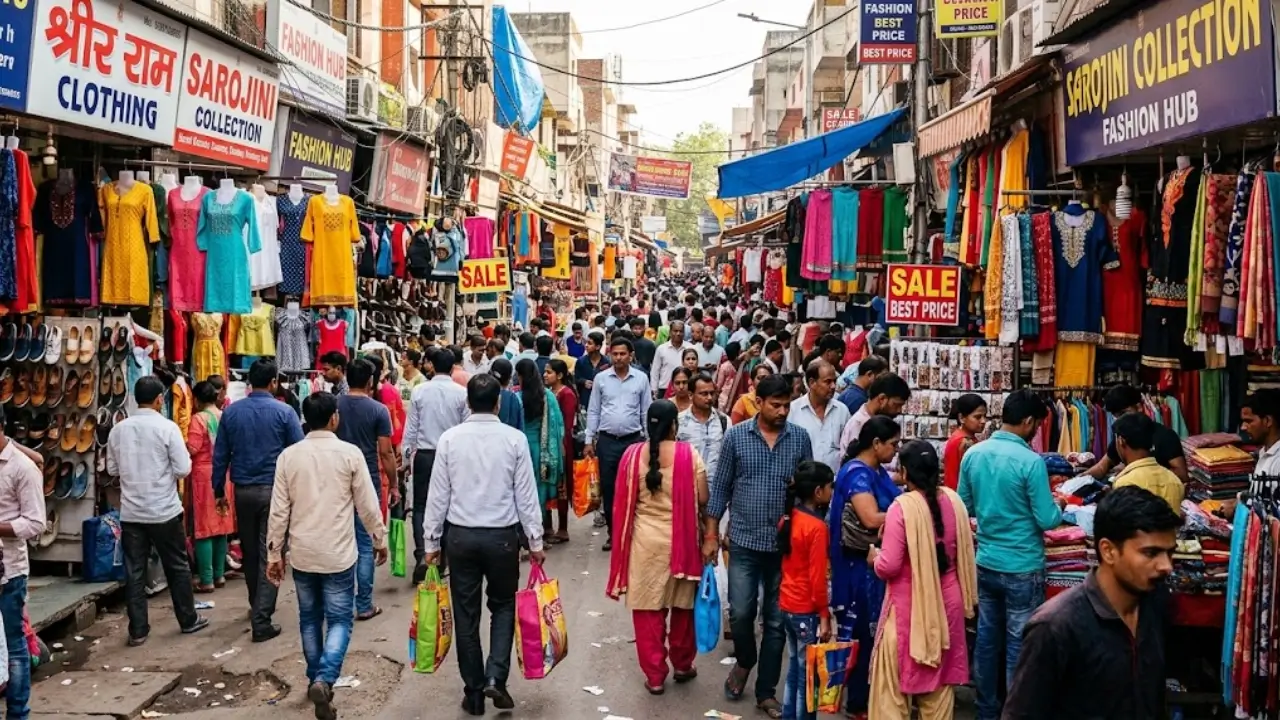
1. Sarojini Nagar Market
The undisputed king of budget fashion. Export-surplus stock from international brands, trendy western wear, footwear, and accessories, all at prices that make you check the tag twice. Tops start around ₹150–300, dresses from ₹300–600.
How to Reach Here: Nearest metro station is INA (Pink/Yellow Line), about a 10-minute walk, or take an e-rickshaw from outside the station. Well connected by bus and app-based cabs too.
Budget: ₹1,000–2,500 can get you a full mixed outfit — tops, bottoms, and accessories combined, if you bargain well.
2. Lajpat Nagar Central Market
Known for ethnic wear, especially unstitched suits, dupattas, sarees, and wedding shopping. Great mix of budget and slightly premium ethnic options, plus a solid range of footwear and jewelry.
How to Reach Here: Lajpat Nagar metro station (Pink/Violet Line interchange) is right next to the market — probably the easiest market to reach on this list.
Budget: ₹800–1,500 for an unstitched suit set; wedding shopping budgets can go from ₹3,000–10,000 depending on how much you buy.
3. Gandhi Nagar Market
One of Asia’s largest wholesale garment markets. Best for bulk buying, resellers, and anyone wanting factory-direct rates on basics like t-shirts, jeans, and nightwear.
How to Reach Here: Nearest metro is Jhilmil (Pink Line) or Geeta Colony, followed by a short auto/e-rickshaw ride, since the market itself is spread across narrow interior lanes not directly on the metro line.
Budget: Wholesale lots start as low as ₹80–150 per piece for basics, but minimum order quantities (usually 3–12 pieces per design) apply.
4. Chandni Chowk (Katra Neel & Nai Sarak)
Old Delhi’s legendary lanes for wholesale fabric, sarees, and traditional wear. Nai Sarak specifically is fabric heaven for tailoring your own outfits cheaply, while Katra Neel is known for sarees and dress materials.
How to Reach Here: Chandni Chowk metro station (Yellow Line) is the closest, followed by a 10–15 minute walk through crowded lanes — comfortable footwear is a must here.
Budget: Fabric starts as low as ₹100–150 per meter; a full unstitched suit piece can be found for ₹400–800.
5. Karol Bagh Market (Ajmal Khan Road)
A mid-range to budget mix, strong for both ethnic and western wear, plus footwear and accessories in the same trip. Slightly more organized than Old Delhi markets, with proper shop fronts instead of just stalls.
How to Reach Here: Karol Bagh metro station (Blue Line) opens almost directly onto Ajmal Khan Road, making this one of the most convenient markets to access.
Budget: ₹500–1,200 for casual wear; ethnic outfits can range ₹800–2,500 depending on fabric and embroidery.
6. Janpath Market
Touristy but still budget-friendly if you bargain hard. Great for boho wear, printed dresses, junk jewelry, and accessories — a favorite among both tourists and college students.
How to Reach Here: Rajiv Chowk metro station (Blue/Yellow Line) is a 5–7 minute walk away, making it one of the most centrally located markets in the city.
Budget: ₹200–500 for printed dresses and tops; accessories can be picked up for as little as ₹50–150 each.
7. Kamla Nagar Market
A student favorite near Delhi University, known for trendy, affordable youth fashion and quick fast-fashion picks — think crop tops, oversized shirts, and everyday casuals.
How to Reach Here: Vishwavidyalaya metro station (Yellow Line) is the closest, roughly a 10-minute walk or a quick rickshaw ride from the station.
Budget: ₹150–400 per piece for casual western wear, making it one of the most pocket-friendly markets for students.
8. Rajouri Garden Market
A blend of branded outlet stores and local budget shops, good for jeans, jackets, and casual wear, with a slightly more mall-like, organized shopping experience.
How to Reach Here: Rajouri Garden metro station (Blue/Pink Line interchange) is directly connected to the market area.
Budget: ₹400–900 for jeans and casual tops; branded outlet discounts can bring jackets down to ₹800–1,500.
9. Shahpur Jat
More curated and boutique-style, but many small designers sell overstock and export-reject pieces at surprisingly low prices — a good middle ground between budget and design-forward fashion.
How to Reach Here: Hauz Khas metro station (Yellow/Magenta Line interchange) is the closest, followed by a short auto ride of about 5–10 minutes.
Budget: ₹600–2,000 depending on whether you’re buying overstock basics or boutique export-reject pieces.
10. Tilak Nagar Market
West Delhi’s answer to Sarojini, less crowded, similar export-surplus stock, and generally more relaxed for bargaining since fewer tourists visit.
How to Reach Here: Tilak Nagar metro station (Blue Line) is right next to the market — a very short walk from the exit.
Budget: ₹150–400 per piece, quite similar to Sarojini Nagar pricing but with slightly easier negotiation.
11. Kirti Nagar Market
Better known for furniture but has budget wholesale garment shops tucked in the lanes, especially for basics like t-shirts, innerwear, and daily-wear sets.
How to Reach Here: Kirti Nagar metro station (Blue Line) is directly adjacent to the market complex.
Budget: ₹100–300 per piece for basics when bought in small wholesale lots.
12. Roop Nagar Market
A quieter wholesale option near North Campus, popular among students and locals for affordable daily-wear clothing without the crowd of bigger markets.
How to Reach Here: Vidhan Sabha or Vishwavidyalaya metro stations (Yellow Line) are the nearest, followed by a short rickshaw ride.
Budget: ₹150–350 per piece for everyday wear — jeans, t-shirts, and casual kurtas.
13. INA Market (Godown Market nearby)
Lesser known for clothes but has hidden export-surplus godowns selling in bulk at wholesale rates — a bit of an insider spot compared to the mainstream markets.
How to Reach Here: INA metro station (Pink/Yellow Line) is right outside the market, same station used for Sarojini Nagar, making it easy to combine both in one trip.
Budget: ₹150–400 per piece, with better rates when buying multiples from the same godown.
14. Palika Bazaar
An underground market at Connaught Place, good for budget western wear and accessories, especially for quick city-center shopping when you’re short on time.
How to Reach Here: Rajiv Chowk metro station (Blue/Yellow Line) has a direct underground connection to Palika Bazaar.
Budget: ₹200–600 for casual wear and accessories; slightly touristy pricing so bargaining is essential.
15. Gaffar Market
Mostly known for electronics, but the surrounding lanes have some solid budget clothing stalls worth checking if you’re already there for gadget shopping.
How to Reach Here: Karol Bagh metro station (Blue Line) is the nearest, roughly a 10-minute walk through the main market road.
Budget: ₹200–500 for casual clothing picked up as a secondary purchase alongside electronics shopping.
Wholesale vs Retail Cloth Markets in Delhi
This distinction matters more than most shoppers realize.
Wholesale markets (like Gandhi Nagar, Chandni Chowk’s Nai Sarak, Kirti Nagar) sell in bulk — often minimum order quantities of 3, 5, or even 12 pieces per design. Prices per piece are dramatically lower, but you can’t always buy just one item. These markets are ideal for resellers, small boutique owners, or families buying for multiple people, such as wedding shopping.
Retail markets (like Sarojini Nagar, Lajpat Nagar, Karol Bagh) sell single pieces at fixed-but-negotiable prices. You pay slightly more per item than wholesale, but you have full flexibility to buy exactly what you need, try things on, and bargain individually.
Practical rule: if you’re buying for yourself or a small group, stick to retail markets. If you’re buying for a big family function or want to resell, wholesale markets save significantly more — but budget extra time, since bargaining happens in bulk lots, not per piece. It’s also worth noting that wholesale markets rarely have trial rooms, so know your size and the brand’s typical fit before committing to a bulk order.
Which Delhi Cloth Market Is Best for Different Needs?
- Best for Western wear: Sarojini Nagar, Kamla Nagar, Rajouri Garden
- Best for Ethnic wear/sarees: Lajpat Nagar, Chandni Chowk, Karol Bagh
- Best for Wedding shopping on a budget: Lajpat Nagar Central Market, Gandhi Nagar
- Best for Fabric/tailoring: Nai Sarak (Chandni Chowk)
- Best for Students/youth fashion: Kamla Nagar, Janpath, Roop Nagar
- Best for Bulk/reseller buying: Gandhi Nagar, Kirti Nagar, INA Godown Market
- Best for Tourists (central location): Janpath, Palika Bazaar
- Best for Designer-style boutique finds: Shahpur Jat
Best Time to Visit Delhi’s Cheap Cloth Markets
- Time of day: Go early — between 11 AM and 1 PM — for the best stock selection and calmer bargaining, before crowds build up. Evenings (post 6 PM) are busier but shopkeepers are often more willing to close quick deals before shutting shop.
- Day of the week: Avoid weekends if you dislike crowds; weekdays (Tuesday to Thursday) are calmer, and shopkeepers have more time and patience to negotiate.
- Season: End-of-season sales (June–July for summer wear, December–January for winter wear) bring genuine clearance discounts. Festive season (September–November) has better stock variety but slightly inflated starting prices due to demand.
- Weekly closures: Many markets have a designated weekly off — Sarojini Nagar is usually shut on Mondays, Chandni Chowk lanes on Sundays, and Gandhi Nagar is quieter on Sundays too. Always check before planning a special trip so you don’t waste travel time.
Bargaining Tips to Save More Money
- Start low, not rude: Offer 40–50% of the quoted price as your opening bid, then negotiate upward gradually.
- Buy in twos: Shopkeepers are far more flexible on price when you commit to buying 2–3 items instead of just one.
- Don’t show excitement: If you visibly love something, prices go up. Stay neutral, even walk away — it’s often the fastest way to get called back with a better offer.
- Compare before committing: Walk through a few shops selling similar items before finalizing — it gives you real leverage and a sense of the fair price range.
- Round off politely: Instead of haggling over ₹10–20, round off the total bill — shopkeepers respond well to quick, friendly closing offers.
- Cash works better: Many small shop vendors offer a slightly better deal for cash payments over card/UPI, since it avoids transaction fees.
- Bargain in the local language where possible: A simple Hindi phrase or two often gets you treated less like a “tourist rate” and more like a regular local buyer.
Things to Check Before Buying Clothes
- Stitching quality: Check seams, buttons, and zippers closely — budget markets sometimes have inconsistent stitching even within the same design.
- Fabric feel and smell: Synthetic blends can look identical to cotton in photos but feel very different in hand. Always touch-test.
- Colour bleeding: For bright or dark ethnic wear, ask if the fabric is colorfast, especially before buying multiple pieces of the same dye lot.
- Size accuracy: Export-surplus stock often runs in international sizing — always try before buying, since exchanges are rarely accepted in these markets.
- No-return policy: Almost all budget markets operate on a strict no-return, no-exchange basis. Inspect thoroughly at the shop itself.
- Genuine vs first-copy branding: If a “branded” tag looks too perfect at too low a price, it’s very likely a first-copy — fine if you know that going in, but don’t pay premium prices assuming authenticity.
Shopping Tips for Tourists Visiting Delhi
- Carry small denomination cash — vendors often “don’t have change” for large notes, which quietly kills your bargaining power.
- Dress simply — visibly expensive clothing or accessories can shift starting prices higher.
- Use metro over cab where possible — most of these markets (Sarojini Nagar, Lajpat Nagar, Karol Bagh, Kamla Nagar, Rajouri Garden) have metro stations within walking distance, saving both time and money.
- Keep valuables secure — these markets are crowded and dense; use a cross-body bag and stay alert, especially in Chandni Chowk’s narrow lanes.
- Eat local while you shop — most markets have legendary street food nearby (chaat in Chandni Chowk, momos in Lajpat Nagar) — factor that into your day.
- Don’t rush — the best deals come from browsing multiple shops, not committing at the first stall.
- Plan clustered market visits — some markets are close enough to combine in one trip, like Sarojini Nagar and INA Market, or Karol Bagh and Gaffar Market, saving on transport and time.
Cheapest Markets in Delhi by Clothing Category
- T-shirts & casual wear: Sarojini Nagar, Gandhi Nagar
- Jeans & denim: Rajouri Garden, Tilak Nagar
- Sarees & unstitched suits: Lajpat Nagar, Chandni Chowk
- Winter wear (sweaters, jackets): Gandhi Nagar, Karol Bagh
- Kids’ clothing: Lajpat Nagar, Karol Bagh
- Ethnic fabric for tailoring: Nai Sarak, Chandni Chowk
- Western dresses & tops: Sarojini Nagar, Kamla Nagar
- Accessories & footwear: Janpath, Palika Bazaar
Conclusion
Delhi’s cloth markets aren’t just shopping destinations — they’re an experience of patience, timing, and negotiation. Whether you’re a college student hunting for weekend outfits, a bride-to-be shopping on a budget, or a small business owner sourcing wholesale stock, there’s a market in this city built exactly for your need. The real secret isn’t finding “the one best market” — it’s knowing which of these fifteen to visit for which purpose, how to actually reach there without wasting half your day, roughly how much to budget, and how to bargain with confidence once you arrive. Do that, and you’ll walk away with a wardrobe that looks far more expensive than it actually was.
FAQs
Which is the cheapest market in Delhi for clothes?
Sarojini Nagar for retail export-surplus wear, and Gandhi Nagar for wholesale bulk buying.
Can I bargain in all Delhi cloth markets?
Yes, bargaining is standard practice in almost every market listed here, except a few fixed-price boutique stores in areas like Shahpur Jat.
Is Sarojini Nagar good for branded clothes?
Yes, it’s known for genuine export-surplus stock, though some first-copy branded items are also mixed in — inspect carefully before buying.
What is the best day to visit these markets?
Weekdays, especially Tuesday to Thursday, offer calmer crowds and better bargaining opportunities than weekends.
Are these markets safe for solo travelers or tourists?
Generally yes, but stay alert with belongings in crowded lanes like Chandni Chowk, and avoid very late evening visits alone.
Can I buy just one piece of clothing from a wholesale market?
Usually no — most wholesale markets require a minimum quantity per design, so they’re better suited for bulk or reseller purchases.
How much money should I carry for a full day of market shopping?
For retail markets like Sarojini Nagar or Lajpat Nagar, carrying ₹2,000–3,000 in cash is usually enough for a solid haul; for wholesale bulk buying, budget higher depending on quantity.
Which market is easiest to reach by metro?
Lajpat Nagar, Karol Bagh, Rajouri Garden, and Kirti Nagar all have metro stations located right next to or within a very short walk of the main market.